
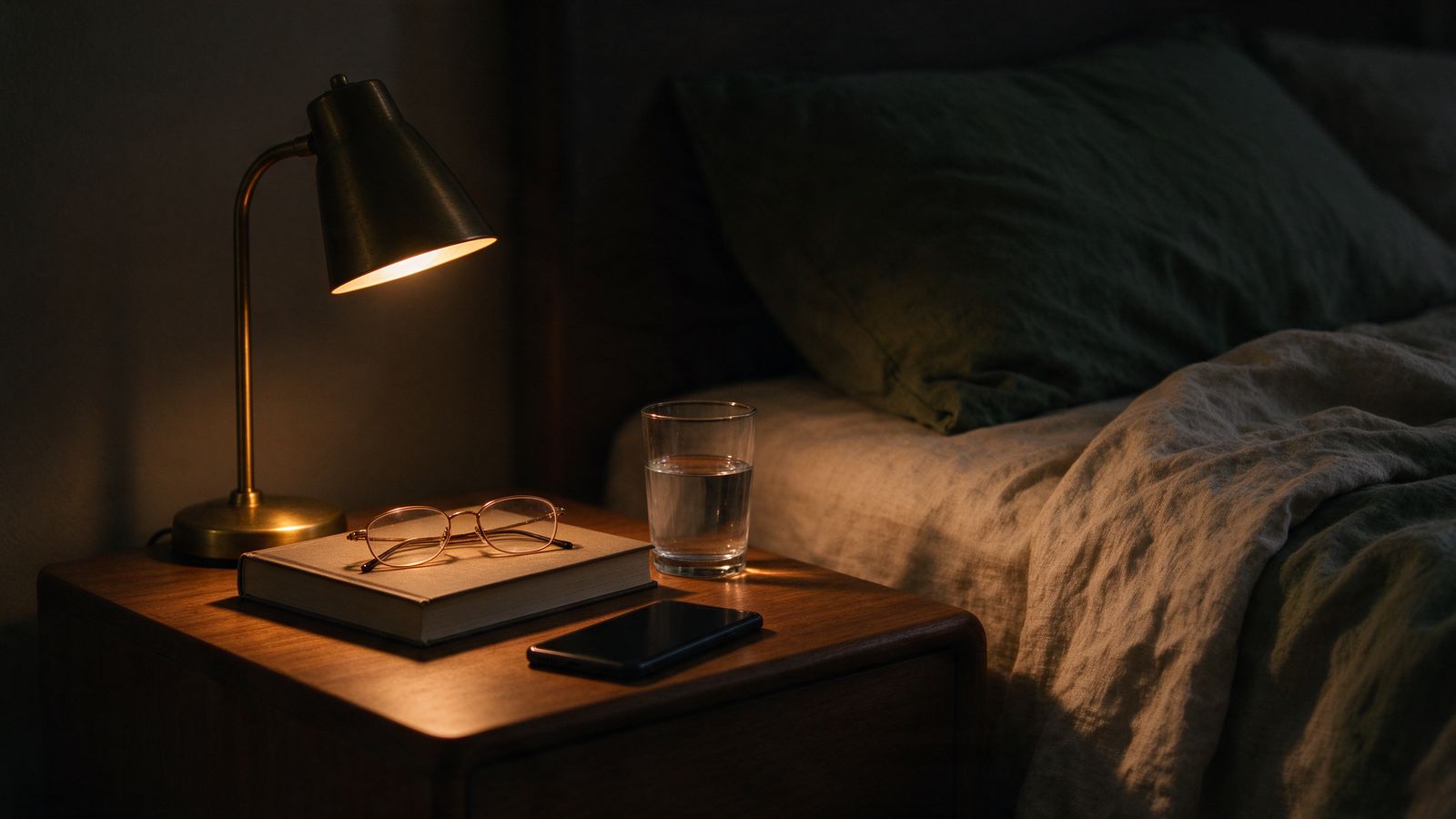
Nobody wakes up wanting cannabidiol. They want to fall asleep faster, feel less wound up, or recover from a hard week of training. Starting from the goal rather than the product changes which questions are worth asking.
Why sleep, stress and recovery dominate CBD questions
These are the areas where CBD marketing concentrates, and they share three features that make them easy to sell into. Symptoms come and go on their own, so almost anything seems to work some of the time. Expectations have a strong effect on how people rate their sleep and mood. And the underlying causes vary enormously, from caffeine timing to thyroid problems to depression.
That combination is exactly why a clinician's view matters. Two people describing "bad sleep" can need completely different things. The research guide covers what studies show; this page covers what to do with that before anything changes.
Sleep: fix the routine, then ask the question
Before any supplement, sleep specialists look at the routine around sleep. Consistent wake times, morning light, caffeine cut off well before bed, alcohol limited (it fragments sleep later in the night), and a dark, cool room are unglamorous and well supported. For chronic insomnia, cognitive behavioral therapy for insomnia (CBT-I) is the first-line treatment recommended in major clinical guidelines, and it is increasingly available through digital programs.
Where CBD comes up, the research is limited: small studies, mixed results, many different products. CBD can cause drowsiness in some people, and drowsiness is not the same as better sleep quality.
- Could a medical cause, such as sleep apnea, reflux or a medication, explain my sleep problem?
- Would CBT-I or a sleep study make sense before trying anything else?
- If I am already using a sleep aid or alcohol at night, what happens if I add CBD?
Stress: separate everyday strain from something more
Everyday stress responds to unexciting things: sleep, movement, time outdoors, social contact and limiting alcohol. When stress becomes persistent worry, panic, low mood or trouble functioning at work or home, it is no longer a wellness question. It deserves an evaluation, because effective, well studied treatments exist.
Most CBD research in this area consists of small or experimental studies, some looking at a single stressful task in a lab. That is interesting science and a weak basis for a daily habit.
If you are in crisis or thinking about harming yourself, call or text 988 to reach the Suicide and Crisis Lifeline in the United States. In an emergency, call 911.
- Is what I am describing ordinary stress, or something we should assess properly?
- Which approaches have the strongest evidence for my situation?
- Could CBD interact with anything I take for mood, sleep or blood pressure?
Recovery: the boring basics carry the weight
Recovery from training is largely sleep, enough total energy and protein, and a sensible progression of load. Soreness after new or harder work is normal; pain that is sharp, localized or getting worse is an injury question for a clinician or physical therapist.
Controlled human research on CBD and exercise recovery is very limited, with small samples and inconsistent results. Topicals are popular with active people, but evidence for them is thinner still. Athletes in tested sports face a separate, real risk: THC traces in a mislabeled product. The athletes guide covers that in detail.
| Routine | Better supported first steps | Where CBD research stands |
|---|---|---|
| Sleep | Consistent schedule, light, caffeine and alcohol timing, CBT-I for chronic insomnia | Limited and mixed |
| Stress | Sleep, activity, social contact, evaluation and evidence-based treatment when persistent | Early, mostly small studies |
| Recovery | Sleep, fuel, protein, progressive load, rest days | Very limited |
Where the routines overlap, and where risks stack
The three routines feed each other: poor sleep raises stress and slows recovery, and hard training can disturb sleep. Risks stack the same way. A person using a sleep aid, an evening drink and a CBD product is combining three things that can each cause drowsiness. Someone on several daily medicines adds the liver enzyme question on top. The interactions guide explains why pharmacists care about this.
- sleep trouble lasts more than a few weeks
- book a visit before buying anything; ask about CBT-I.
- stress is affecting work, relationships or mood
- treat it as a health question and get an evaluation.
- you compete in a tested sport
- read the drug testing guide first.
- you use alcohol or sedating medicines at night
- ask a pharmacist about combined drowsiness.
Preparing the visit: what to bring
A ten-minute appointment goes further with preparation. Bring a one-week log of sleep and stress, a complete list of medicines and supplements, and, if you are considering a specific product, its label and current lab report. The question builder on our home page will draft your questions for you.
Should I take CBD at night for sleep?
We cannot advise on that, and the research does not settle it. Persistent trouble sleeping is worth raising with a clinician, who can look for causes and discuss approaches with stronger evidence, such as cognitive behavioral therapy for insomnia.
Can I combine CBD with alcohol or a sleep aid?
Drowsiness from CBD can add up with alcohol, sleep aids and other sedating medicines. Ask your pharmacist about your specific combination before mixing anything.
Does CBD help muscles recover after training?
Controlled human research on exercise recovery is very limited and inconsistent. Sleep, nutrition and sensible training load have much stronger evidence, and competitive athletes also need to consider drug testing.
What if stress is starting to feel like more than stress?
Ongoing worry, low mood, panic or trouble functioning deserve a proper evaluation with a clinician. If you are in crisis or thinking about harming yourself, call or text 988 in the United States, or call 911 in an emergency.
For sleep, stress and recovery, the best supported steps are routine changes and proper evaluation. CBD research in these areas is limited, and the main known risks come from stacking drowsiness and drug interactions. Bring the question to your clinician with a log and your medication list.