
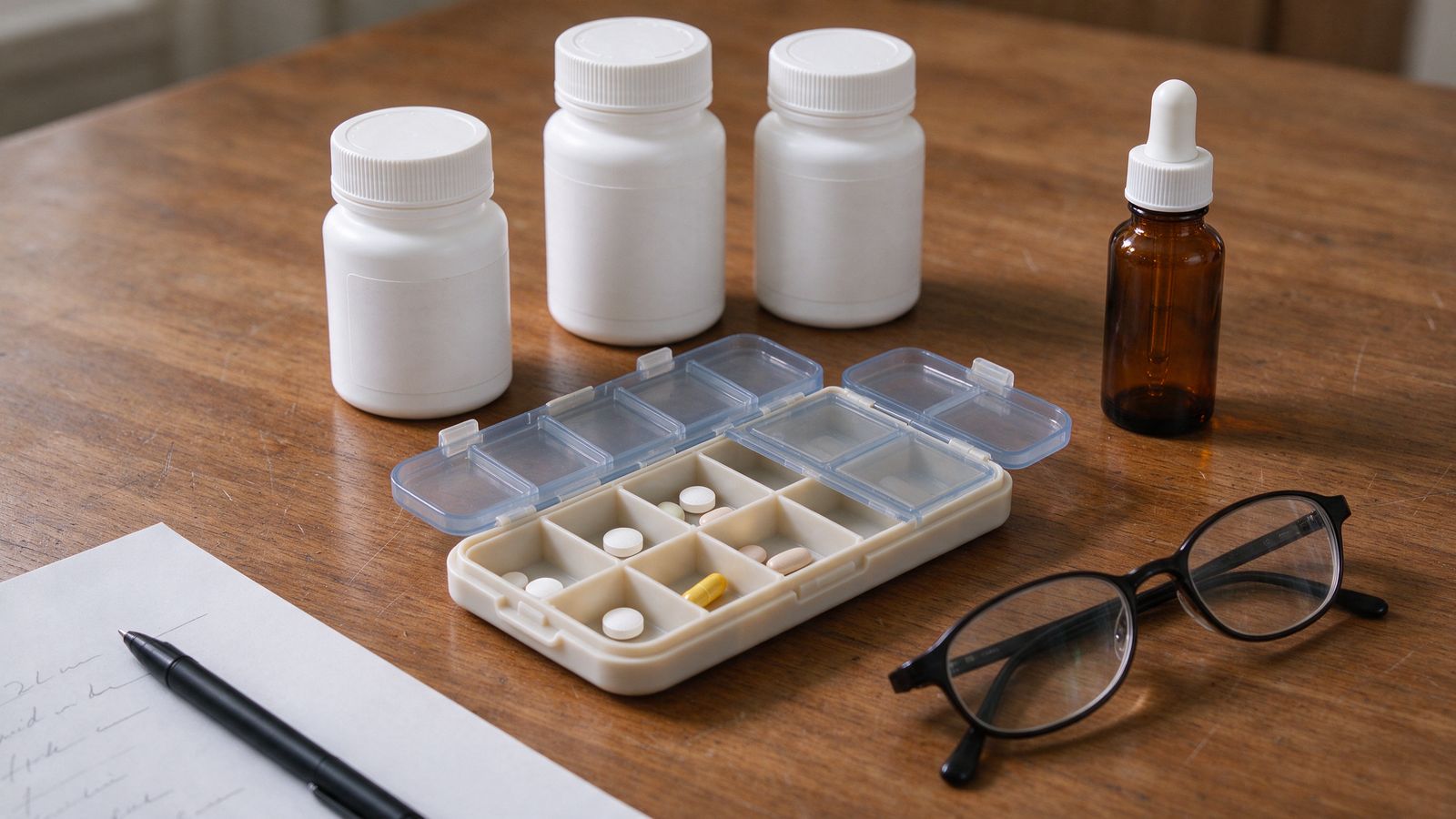
If you remember one thing from this guide, make it this: CBD is not inert. It is processed by the liver, it can slow some of the liver's drug-processing enzymes, and that is the reason pharmacists want to know about it.
CYP450 in plain words: a shared set of checkout lanes
Cytochrome P450, usually shortened to CYP450, is a family of enzymes, mostly in the liver, that break down a large share of prescription and over-the-counter medicines. Think of them as checkout lanes. Each medicine tends to use particular lanes, named with codes like CYP3A4, CYP2C19 and CYP2C9.
CBD uses some of those lanes itself and, in research, has been shown to slow several of them, including CYP3A4 and CYP2C19. When a lane slows down, a medicine that depends on it can build up to higher levels than intended. When a medicine needs the lane to become active, the opposite can happen.
Whether an interaction matters depends on the medicine, its safety margin, the amount of CBD reaching your bloodstream, and your own liver. Two people on the same drug can get different answers, which is exactly why this guide gives questions rather than verdicts.
Interactions run in two directions
| Direction | What happens | Why it matters |
|---|---|---|
| CBD affects your medicine | CBD slows an enzyme your medicine relies on, so the medicine can stay in the body longer or reach higher levels | Medicines with a narrow gap between helpful and harmful levels need the most care |
| Your medicine affects CBD | Some drugs speed up or slow down the enzymes that process CBD, changing how much CBD is present | The same product can behave differently once a new prescription starts |
| Effects add together | Not an enzyme issue: CBD's possible drowsiness adds to other sedating substances | Alcohol, sleep aids and some pain or anxiety medicines are the usual examples |
The best documented example comes from the prescription CBD medicine itself. Its FDA label describes raised levels of another anti-seizure drug's active form when the two are combined, and liver enzyme elevations that were more common with a second anti-seizure drug. Those are specialist settings, but they show the mechanism is real rather than theoretical.
Medicine groups pharmacists most often flag
The list below is not exhaustive and is not a list of medicines to avoid. It is a list of reasons to ask. If you take anything in these groups, mention it specifically.
- Blood thinners. Published case reports describe changes in clotting test results after people added CBD to warfarin.
- Anti-seizure medicines. The clearest documented interactions, from the prescription medicine's own studies.
- Sedating medicines. Sleep aids, some anxiety and pain medicines and sedating antihistamines, where drowsiness can add up.
- Antidepressants and other mood medicines. Several are processed by the same enzyme families.
- Heart and blood pressure medicines. Some rely on CYP3A4.
- Transplant and immune-suppressing medicines. These often have narrow safety margins, so even modest level changes matter.
Does the format change the interaction risk?
Format affects how much CBD reaches the bloodstream, which affects how likely an enzyme interaction is. Swallowed products (oils, capsules, edibles) pass through the liver before reaching the rest of the body. Topicals are generally thought to reach the bloodstream far less, though products and use vary. The product formats guide compares them. Whatever the format, tell your pharmacist which one you are considering.
- you take any daily prescription
- ask a pharmacist before starting, with the product and lab report.
- a medicine has a narrow safety margin
- expect your prescriber to want a plan, or to advise against it.
- a new prescription starts
- mention CBD again; the answer can change.
- the product's content is unverified
- nobody can judge the interaction well; verify the lab report first.